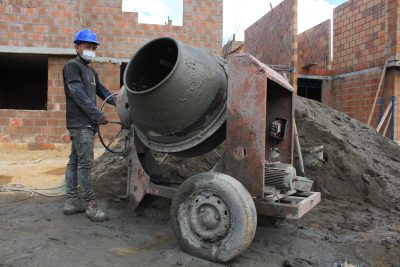
A Comprehensive Guide to Types, Properties, and Applications
Cement, the fundamental binding agent in concrete and mortar, is a complex material whose composition dictates its properties, performance, and suitability for various construction applications. Understanding cement composition is crucial for engineers, architects, contractors, and anyone involved in construction projects, enabling informed decisions about material selection and ensuring the longevity and structural integrity of built environments. This comprehensive guide delves into the intricacies of cement composition, exploring the different types of cement, the role of various constituents, and the impact of these factors on cement properties and applications.
- The Fundamentals of Cement Chemistry: A Hydration-Based Binding System
Cement, specifically hydraulic cement, sets and hardens through a chemical process called hydration. This process involves the reaction of cement compounds with water, forming a hardened matrix that binds together aggregates (sand, gravel, or crushed stone) to create concrete or mortar. The primary chemical components of cement are calcium silicates, calcium aluminates, and calcium aluminoferrites. These compounds react with water to form various hydration products, primarily calcium silicate hydrate (C-S-H), which is responsible for the strength and durability of hardened cement paste.
The chemical reactions involved in cement hydration are complex and proceed at different rates. The rate of hydration, and consequently the rate of strength development, is influenced by factors such as the chemical composition of the cement, the fineness of the cement particles, the water-cement ratio, and the temperature.
- Major Compounds in Portland Cement and Their Roles:
Portland cement, the most common type of cement used globally, is composed primarily of the following four main compounds:
- Tricalcium Silicate (C3S):This is the major component of Portland cement, typically accounting for 50-70% of its composition. C3S is responsible for the early strength development of cement, particularly in the first week after hydration. It reacts rapidly with water, generating a significant amount of heat during the hydration process. Higher C3S content generally leads to faster setting and higher early strength, but it can also contribute to increased heat of hydration and potentially higher shrinkage. The chemical notation C3S refers to 3CaO·SiO2.
- Dicalcium Silicate (C2S):Typically constituting 15-30% of Portland cement, C2S hydrates more slowly than C3S. Its contribution to strength development is primarily in the later stages, after several weeks or even months. C2S contributes to the long-term strength and durability of cement. Its slower rate of hydration results in lower heat generation compared to C3S, making it beneficial in applications where heat of hydration is a concern. The chemical notation C2S refers to 2CaO·SiO2.
- Tricalcium Aluminate (C3A):Present in smaller proportions, typically 5-12%, C3A reacts very rapidly with water, generating a large amount of heat. This rapid reaction can cause flash setting if not controlled. To prevent this, gypsum (calcium sulfate) is added to Portland cement to retard the hydration of C3A. While C3A contributes to early strength, its rapid hydration can also lead to increased shrinkage and reduced durability in sulfate-rich environments. The chemical notation C3A refers to 3CaO·Al2O3.
- Tetracalcium Aluminoferrite (C4AF):This compound typically makes up 5-15% of Portland cement. C4AF hydrates relatively slowly and contributes less to strength development than the other three major compounds. Its primary role is to reduce the clinkering temperature during cement manufacturing. While it contributes to the overall hydration process, its influence on strength and other properties is relatively minor compared to C3S, C2S, and C3A. The chemical notation C4AF refers to 4CaO·Al2O3·Fe2O3.
You can use the following communication methods to contact us and receive advice:
WhatsApp: +989178446229
Mail: sales@petrorate.com

III. Minor Constituents and Their Influence:
In addition to the four major compounds, Portland cement also contains minor constituents that can significantly impact its properties. These include:
- Gypsum (CaSO4·2H2O):Added to regulate the setting time of cement, gypsum controls the rapid hydration of C3A, preventing flash setting. The amount of gypsum added is carefully controlled to optimize the setting time and workability of the cement paste.
- Alkali Oxides (Na2O, K2O):Present in small amounts, alkali oxides can contribute to alkali-silica reaction (ASR) if reactive aggregates are used in concrete. ASR is a deleterious reaction between the alkalis in cement and certain silica minerals in aggregates, leading to expansion and cracking of concrete. Low-alkali cement is often used to mitigate the risk of ASR.
- Magnesia (MgO):Excessive amounts of magnesia can lead to delayed expansion and cracking of concrete due to the slow hydration of periclase (crystalline MgO). The amount of MgO is typically limited to a specified maximum level in cement standards.
- Free Lime (CaO):Uncombined lime in cement can lead to expansion and cracking of concrete as it slowly hydrates over time. The amount of free lime is controlled during cement manufacturing.
- Types of Cement and Their Compositional Differences:
Different types of cement are manufactured to meet specific performance requirements. These types vary in their chemical composition and fineness, leading to differences in their properties and suitability for different applications. The American Society for Testing and Materials (ASTM) defines several types of Portland cement, designated as Type I, Type II, Type III, Type IV, and Type V.
- Type I (Ordinary Portland Cement):This is the general-purpose cement suitable for a wide range of applications where specific properties are not required. It typically has a balanced composition of the four major compounds.
- Type II (Moderate Sulfate Resistance):This cement has a lower C3A content than Type I, making it more resistant to sulfate attack. It is used in structures exposed to moderate sulfate concentrations in soil or water.
- Type III (High Early Strength):Type III cement is characterized by a high C3S content and a finer particle size, leading to rapid hydration and high early strength development. It is used when rapid formwork removal or early loading is required.
- Type IV (Low Heat of Hydration):This cement has a low C3S and C3A content, resulting in a lower rate of heat generation during hydration. It is used in massive concrete structures, such as dams, to minimize thermal stresses and cracking.
- Type V (High Sulfate Resistance):This cement has a very low C3A content, providing excellent resistance to sulfate attack. It is used in structures exposed to severe sulfate concentrations in soil or water.
Beyond these basic types, other specialized cements are available, including:
- Portland-Pozzolan Cement (Type IP):This cement contains a blend of Portland cement and pozzolanic materials, such as fly ash, silica fume, or volcanic ash. Pozzolans react with calcium hydroxide, a byproduct of cement hydration, to form additional C-S-H, improving the long-term strength and durability of concrete.
- Portland-Slag Cement (Type IS):This cement contains a blend of Portland cement and ground granulated blast-furnace slag (GGBFS), a byproduct of iron manufacturing. GGBFS contributes to strength development and improves the resistance of concrete to various forms of deterioration, including sulfate attack and alkali-silica reaction.
- Masonry Cement:Specifically designed for mortar applications, masonry cement typically contains a blend of Portland cement, hydrated lime, and other additives to improve workability, water retention, and bonding properties.
- Calcium Aluminate Cement (CAC):This cement is made from aluminous clinker and has a very high alumina content. CAC is known for its rapid setting and hardening, high early strength, and resistance to chemical attack. However, it can undergo conversion, leading to a decrease in strength over time, and should be used with caution and proper design considerations.
- Impact of Cement Composition on Properties and Performance:
The composition of cement has a profound impact on its properties and performance in concrete and mortar. Key properties affected by cement composition include:
- Strength:The type and proportion of cement compounds, particularly C3S and C2S, significantly influence the strength development of cement. Higher C3S content leads to higher early strength, while C2S contributes to long-term strength.
- Setting Time:The presence and proportion of C3A and the amount of gypsum added control the setting time of cement.
- Heat of Hydration:The hydration of C3S and C3A generates heat. Cement with higher C3S and C3A content will have a higher heat of hydration, which can be a concern in massive concrete structures.
- Sulfate Resistance:Low C3A content is crucial for resisting sulfate attack. Type II and Type V cements are specifically designed for sulfate resistance.
- Alkali-Silica Reaction (ASR) Resistance:Low-alkali cement can be used to mitigate the risk of ASR.
- Durability:The composition of cement affects the long-term durability of concrete, including its resistance to chemical attack, freeze-thaw cycles, and abrasion.
- Workability:The fineness of cement particles and the presence of additives can influence the workability of cement paste and concrete.
- Manufacturing Processes and Composition Control:
The composition of cement is carefully controlled during the manufacturing process, which involves:
- Raw Material Preparation:Raw materials, primarily limestone, clay, and other minerals, are crushed and ground to a fine powder. The proportions of these materials are carefully controlled to achieve the desired chemical composition.
- Clinker Production:The raw material mix is heated in a rotary kiln at high temperatures (around 1450°C) to produce clinker, a nodular material composed of calcium silicates, calcium aluminates, and calcium aluminoferrites.
- Grinding and Additive Addition:The clinker is cooled and then ground into a fine powder with a small amount of gypsum to regulate the setting time. Other additives, such as pozzolans or slag, may also be added at this stage to produce different types of cement.
Quality control measures are implemented throughout the manufacturing process to ensure that the cement meets the required chemical and physical specifications. This includes regular testing of raw materials, clinker, and finished cement.
You can use the following communication methods to contact us and receive advice:
WhatsApp: +989178446229
Mail: sales@petrorate.com
VII. Applications of Different Cement Types:
The selection of the appropriate cement type is crucial for the success of any construction project. Here are some common applications for different cement types:
- Type I:General-purpose concrete construction, pavements, sidewalks, and buildings.
- Type II:Structures exposed to moderate sulfate concentrations, such as bridge foundations and retaining walls.
- Type III:Rapid formwork removal, precast concrete elements, and emergency repairs.
- Type IV:Massive concrete structures, such as dams and large bridge piers.
- Type V:Structures exposed to severe sulfate concentrations, such as marine environments and wastewater treatment plants.
- Portland-Pozzolan Cement (Type IP):Concrete structures requiring improved durability and reduced permeability, such as bridges, tunnels, and marine structures.
- Portland-Slag Cement (Type IS):Concrete structures requiring improved resistance to sulfate attack and alkali-silica reaction, such as pavements and foundations.
- Masonry Cement:Construction of brick, block, and stone masonry walls.
- Calcium Aluminate Cement (CAC):Specialty applications requiring rapid setting and hardening, such as refractory linings, sewer pipes, and emergency repairs. Requires careful design and application due to potential for strength conversion.
VIII. Emerging Trends and Future Directions:
Research and development efforts are focused on developing more sustainable and durable cement materials. This includes:
- Alternative Cementitious Materials (ACMs):Exploring alternative materials to replace Portland cement, such as alkali-activated materials (AAMs) or geopolymers, which can utilize industrial byproducts and reduce carbon emissions.
- Supplementary Cementitious Materials (SCMs):Increasing the use of SCMs, such as fly ash, slag, and silica fume, to improve the performance and sustainability of concrete.
- Nano-Modified Cement:Incorporating nanomaterials into cement to enhance its properties, such as strength, durability, and resistance to cracking.
- Carbon Capture and Utilization:Developing technologies to capture carbon dioxide from cement plants and utilize it in concrete production, reducing the carbon footprint of the cement industry.
- Conclusion:
Understanding cement composition is fundamental to ensuring the quality, durability, and longevity of concrete structures. By selecting the appropriate cement type and considering the impact of different compounds on cement properties, engineers and contractors can optimize the performance of concrete and mortar in various applications. As the construction industry continues to evolve, ongoing research and development efforts will lead to the development of new and innovative cement materials that are more sustainable, durable, and resilient. This ongoing pursuit of improved cement technology is essential for building a more sustainable and resilient built environment for future generations.